How Swiss Timekeeping Techniques Shape a Watch’s Identity

How Swiss Timekeeping Techniques Shape a Watch’s Identity

For the uninitiated, ‘Swiss Made’ is a marketing tag and a small-font assurance of quality tucked at six o’clock. But to those who have spent time behind a loupe or have been tracking the arc of a second hand across a room, it’s a shorthand for a specific kind of architectural intent. Swiss watchmaking is a spectrum that ranges from the clinical precision of material science to the romantic geometry of a moonphase.

A watch’s identity is forged in the tension between its mechanics and its materials. It is the difference between the cold, scratch-resistant embrace of high-tech ceramic and the tactile warmth of a hand-engraved dial. When we talk about technique, we’re considering how a brand chooses to manifest its philosophy in three dimensions. Whether it’s the everyday elegance of a Tissot or the avant-garde theatrics of an Alexander Shorokhoff, the Swiss influence is the invisible hand that balances proportion with performance.
The Case Studies: Five Expressions of Swiss DNA

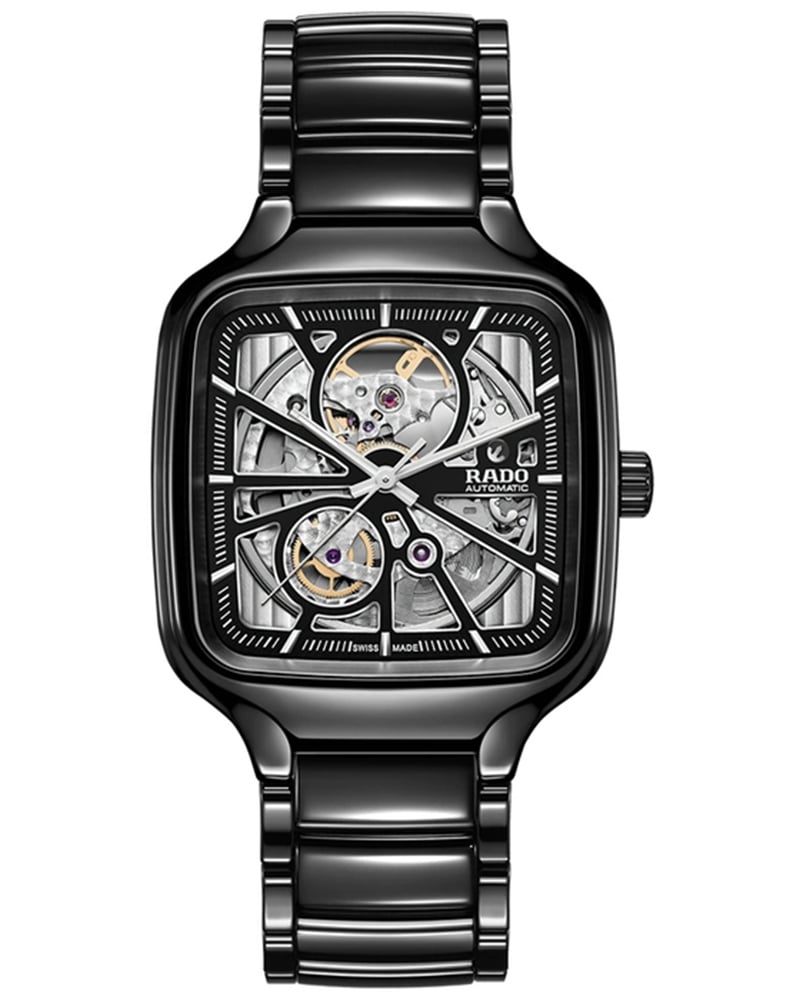
Rado True Square

(SKU | R27086152)

Rado has long been the master of materials, and the True Square is perhaps the purest expression of their obsession with high-tech ceramic. While others were perfecting steel, Rado was busy reinventing the very skin of the watch.

  • Material mastery: The case is an injected monobloc high-tech ceramic—lightweight, hypoallergenic, and virtually impervious to scratches.
  • Geometric identity: The square silhouette is a structural statement that challenges the traditional round Swiss aesthetic while maintaining perfect ergonomic proportions.
  • Mechanical logic: Often featuring the R734 automatic movement, it boasts an 80-hour power reserve and a Nivachron™ hairspring, ensuring the ‘soul’ of the watch is as resilient as its shell.
  • Visual philosophy: The open-heart variations provide a window into Swiss mechanical logic, proving that even a futuristic material can house a traditional heart.

View Product

Baume & Mercier Riviera

(SKU | BMM0A10716)

If the True Square is about the future, the Riviera is about the heritage of ‘sport-chic.’ Originally launched in 1973, the modern 10716 iteration is a masterclass in how Swiss engineering handles the pinnacle of horology—rugged enough for 300m depths, yet refined enough for a linen suit.

  • The Baumatic calibre: At its core is the BM13-1975A movement, a manufacture calibre offering a staggering five-day (120-hour) power reserve and COSC-level precision.
  • Dodecagonal design: The iconic 12-sided bezel with four screws is a geometric nod to the 12 hours on the dial, a classic Swiss technique of balancing form and function.
  • Material versatility: A brushed and polished stainless steel case paired with a blue anodised aluminium ring and a blue rubber strap creates a tactile, high-contrast identity.
  • Aquatic integrity: Rated to 300m water resistance, it utilises a screw-down crown and sapphire caseback to prove that Swiss elegance doesn’t have to be fragile.

View Product

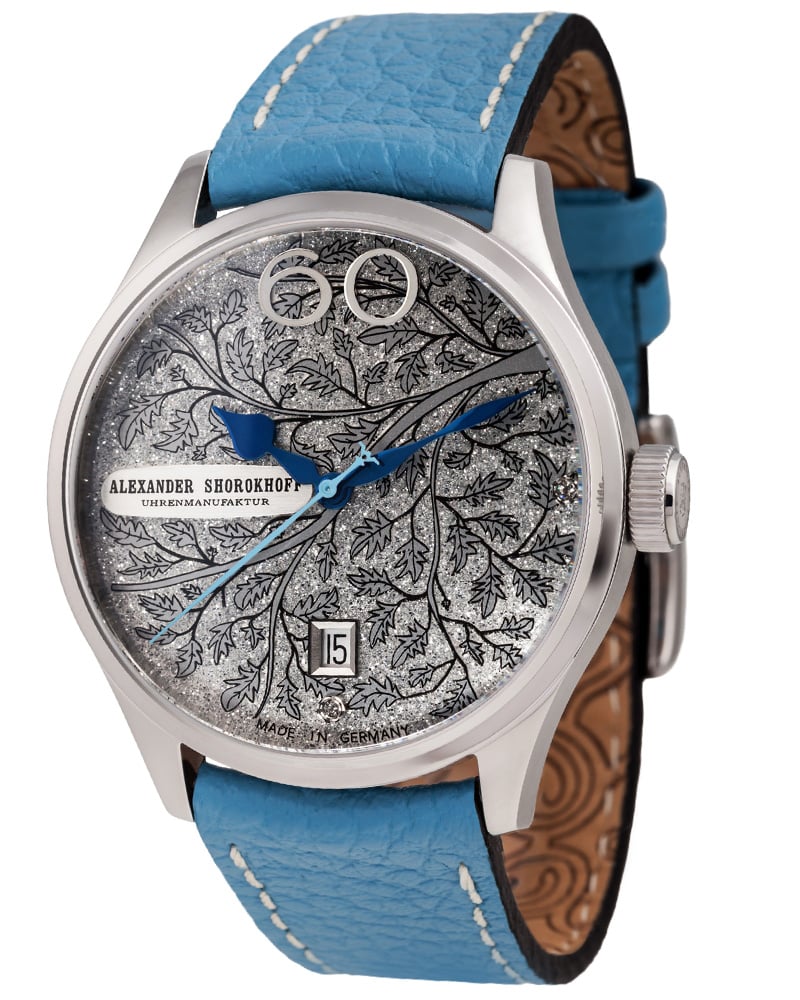
Alexander Shorokhoff Women Winter

(SKU | ASLA-WIN-2)

While Swiss technique often implies restraint, Alexander Shorokhoff uses it as a foundation for artistic rebellion. The ‘Winter’ model is less a timepiece and more a landscape on the wrist, showing how Swiss mechanics can support a purely expressive identity.

  • Artistic dial: The dial is a snow-covered landscape, achieved by applying diamond dust in an innovative process that captures light like a fresh frost.
  • Engraved soul: Unlike mass-produced movements, the oscillating weight of the automatic movement is hand-engraved and refined, a nod to old-world Swiss finishing techniques.
  • Chromatic detail: The use of blued stainless steel hands provides a sharp, cool contrast against the silvered dial, ensuring legibility isn’t sacrificed for art.
  • Limited identity: By focusing on limited runs and handmade uniqueness, the brand aligns with the Swiss tradition of the atelier rather than the factory.

View Product

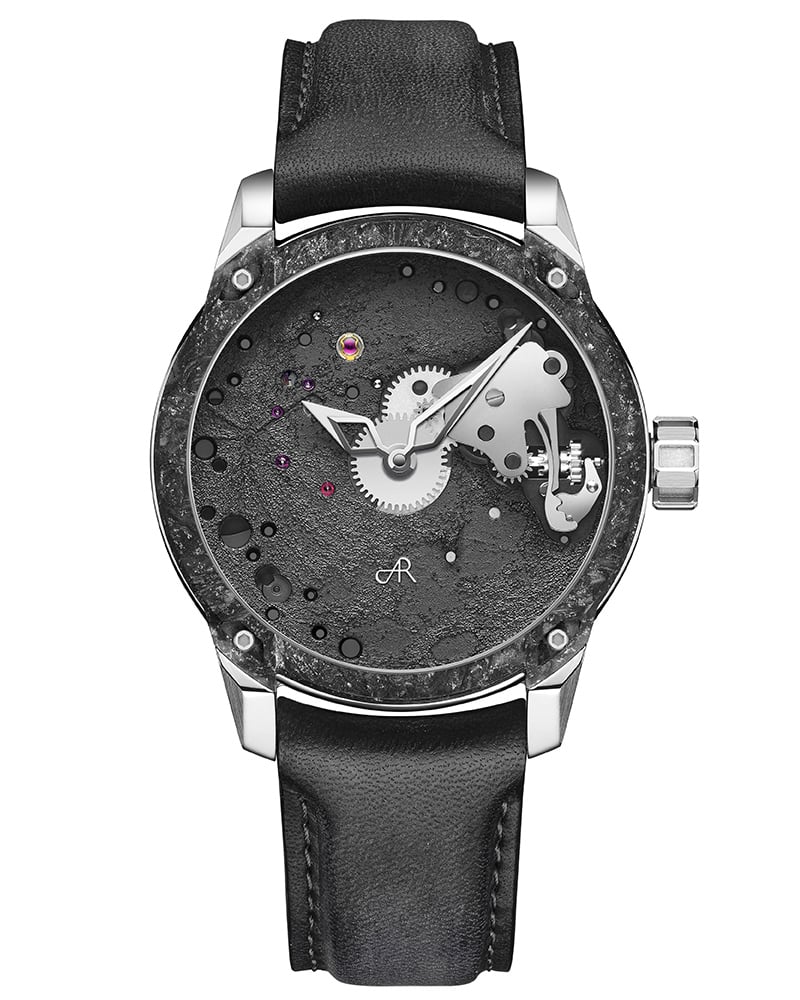
Auguste Reymond Origin Lunar

(SKU | AROR15H301000301)

Auguste Reymond’s Origin series marks a return to the mechanical purity of the Jura Mountains. The Lunar model, in particular, uses the moonphase complication as a feature, and as the watch’s raison d'être.

  • The Unitas legacy: It utilises the manual-winding Unitas movement, a legendary Swiss tractor known for its reliability and the satisfying tactile feedback of the wind.
  • Lunar texturing: The dial is etched with lunar-surface textures, bringing a three-dimensional depth that mimics the celestial body it tracks.
  • Fused-carbon bezel: In a bold move, the bezel incorporates fused carbon that glows in low light, blending traditional astronomy with modern material engineering.
  • Skeletonised lugs: The case architecture features open, carved geometry that lightens the visual weight, a hallmark of sophisticated Swiss case-making.

View Product

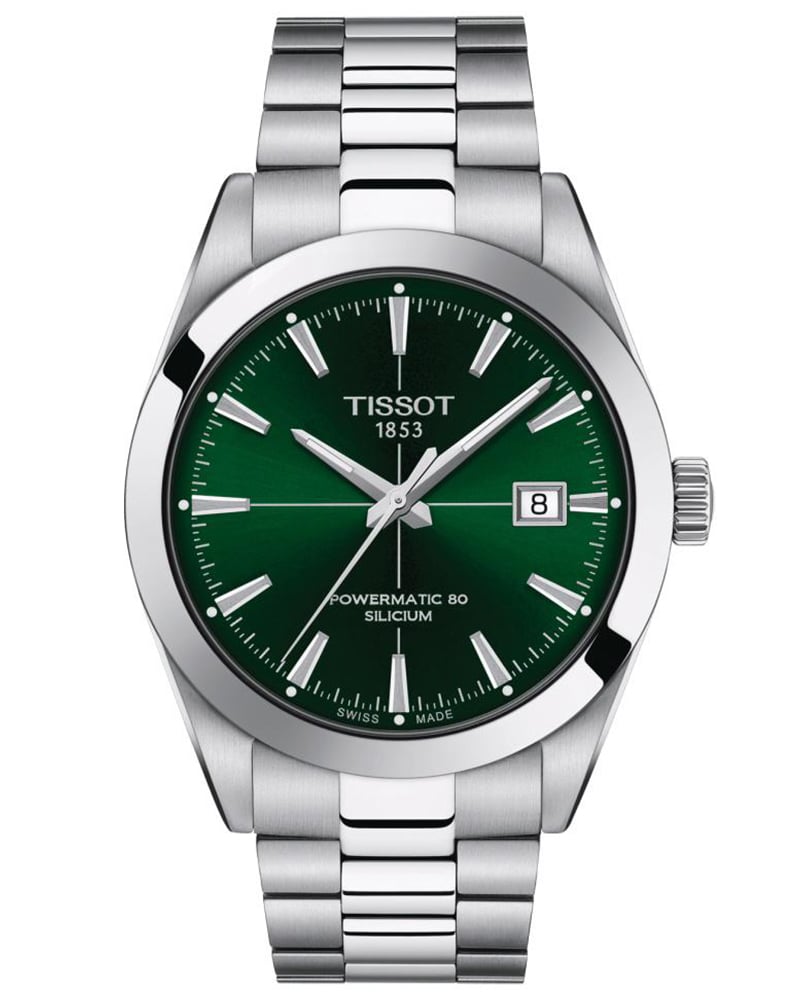
Tissot T-Classic

(SKU | T1274071109101)

Tissot is a foundational Swiss brand. The T-Classic collection serves as the industry’s yardstick for what an everyday Swiss watch should be: understated, impeccably built, and accessible.

  • The Powermatic 80: Many models in this range house the Powermatic 80 movement, which democratised high-power-reserve Swiss mechanics for the modern collector.
  • Proportional classicism: The designs are deliberately cuff-friendly, focusing on slim profiles and uncluttered dials that prioritise readability over theatre.
  • Swiss quartz precision: In models where quartz is used, it’s done with the same level of finish as mechanicals, upholding the reputation of Le Locle’s precision engineering.
  • Timeless finishes: From sunburst dials to Roman numeral indices, the T-Classic uses the greatest hits of Swiss design language to create a watch that feels relevant in any decade.

View Product

Of style and substance

When it comes to premium horology, identity is defined by how a brand prioritises the elements of Swiss tradition. We see a divergence where Rado leans into the futuristic resilience of material science, while Baume et Mercier focuses on the mechanical autonomy of the long-haul power reserve. Meanwhile, brands like Auguste Reymond and Alexander Shorokhoff use Swiss foundations to explore celestial and artistic narratives respectively. Ultimately, Swiss watchmaking is a cohesive language used to tell very different stories, ranging from the high-utility reliability of Tissot’s daily-wear classics to the specialised, hand-finished complexity of niche independent houses. Whether the focus is on the durability of ceramic or the poetry of a moonphase, the underlying thread is a commitment to mechanical logic that ensures longevity.

More than the sum of its parts

Ultimately, a watch is the most intimate piece of design one can wear, making the choice a profound act of personal curation. It is a declaration of where you stand in the world. When you opt for the Baume et Mercier Riviera, you’re adopting a sharp, 1970s jet-set silhouette backed by a Baumatic movement that refuses to quit. To strap on a Rado True Square is to pivot towards the future—a narrative of high-tech resilience where architectural ceramic replaces the vulnerability of steel.

This is the true genius of the Swiss identity: the middle ground. Where a 300m-depth diver is still slender enough to slide under a crisp cuff, and where a diamond-dusted dial still beats with rigorous chronometric intent. It is a refusal to let the skin of the watch compromise its mechanical heart. Whether your taste skews towards the avant-garde theatrics of Shorokhoff or the board-ready classicism of a Tissot, the through-line remains the same. You are wearing a culture that views time not just as something to be spent, but as something to be measured with a very specific kind of Swiss grace

FAQs

The Baumatic is a manufacture movement that solves three modern problems: it has a 120-hour power reserve (so you can leave it off all weekend and it’s still ticking on Monday), it's highly anti-magnetic, and it offers chronometer-level accuracy.

‘Better’ is subjective, but ceramic is significantly harder. It won’t scratch, it’s much lighter than steel, and it adjusts to your body temperature almost instantly. However, unlike steel, it can crack if dropped on a hard surface from a height.

It’s a choice for the purist. Manual winding creates a daily ritual between the owner and the machine. The Unitas movement is also large and beautiful to look at through a caseback, filling the space better than many smaller automatic calibres.

Scale and vertical integration. Being part of the Swatch Group allows Tissot to use high-quality movements like the Powermatic 80 (developed with ETA) at a volume that brings the cost down without sacrificing the Swiss precision.

It’s a sustainable luxury approach. They use the micro-particles leftover from the gemstone polishing process and apply them to the dial. It creates a shimmering, frosted texture that is unique to each piece, bridging the gap between jewellery and horology.

Anatomy of Watch Lugs: The Unsung Heroes of Fit and Form
Minimal, Modern, Magnetic: Why Rado Watches Age Better Than Trends