- Price: High To Low
- Best Sellers
- Popularity
- Price: Low to High
- Discount


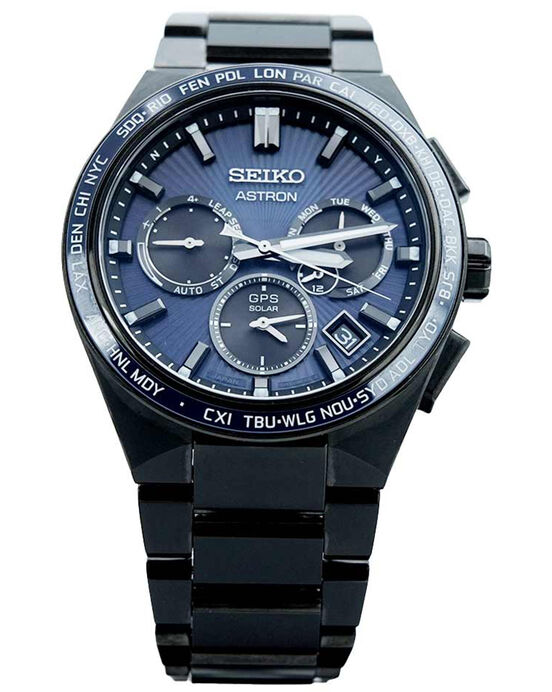

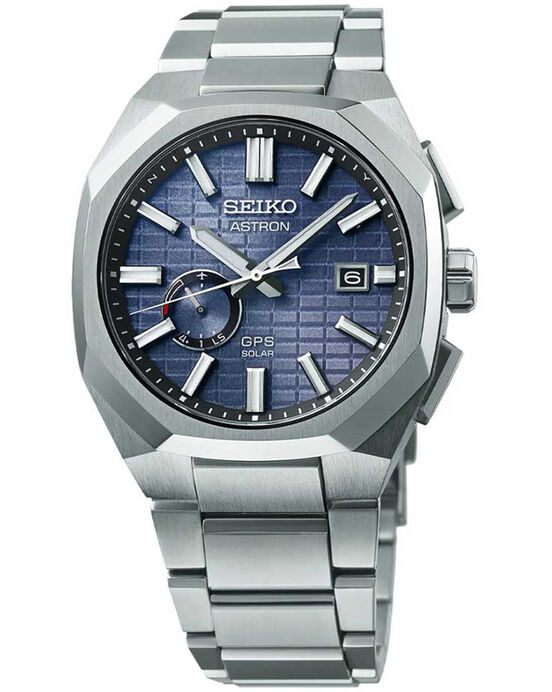
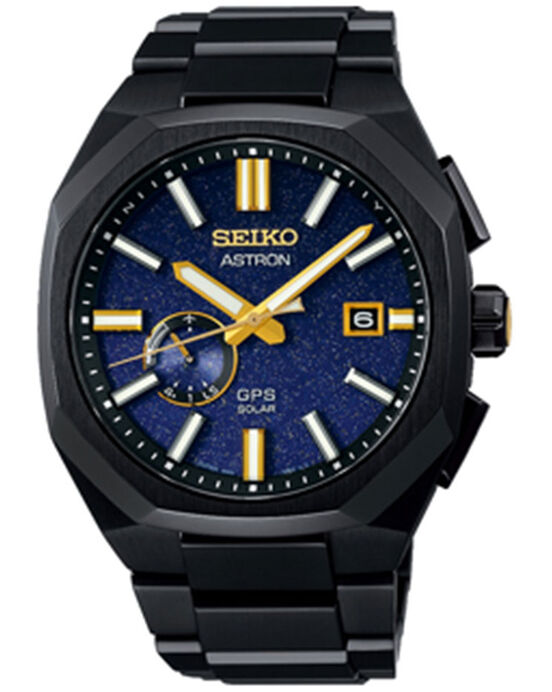
Seiko Astron: Precision Timekeeping Without GPS Signal Worries
The Seiko Astron GPS Solar connects to satellites orbiting 20,200 km above Earth, synchronises your watch to atomic-clock precision, and powers itself from any light source. No battery swaps, no manual time zone corrections, no guesswork. When synchronized with GPS, the Astron accuracy improves to one second every 100,000 years.
A Japanese Watch Built for Global TravellersA Japanese Watch Built for Global Travellers
Crossing time zones with a conventional quartz watch means pulling the crown, scrolling through hours, and hoping you got the date right. Multiply that by a dozen flights a year and the frustration adds up. The Seiko Astron GPS Solar watch eliminates every step of that process: it captures time, latitude, longitude, and altitude data automatically, then adjusts the hands to the correct local time zone without any input from the wearer. Astron watches support approximately 38–39 time zones, covering virtually every inhabited region on the planet.
Seiko built the foundation for this technology over more than a century of Japanese watchmaking. The company was founded in 1881 as a jewellery shop, produced Japan's first wristwatch in 1913, and launched the world's first quartz watch on December 25, 1969: the original Astron. That 1969 model kept time to ±5 seconds per month, roughly 100 times more precise than typical mechanical watches of its era. The modern Seiko Astron GPS Solar is the direct descendant of that breakthrough, now combining satellite timing, solar power, and advanced materials into a single wrist-worn instrument.
How Quartz Technology Powers the Seiko Astron Collection
The Astron collection layers three additional systems on top of that quartz foundation:
Reliable Solar Power- Solar cells integrated into the dial convert light into electrical energy and store it in a rechargeable cell. The watch absorbs all the energy it needs from natural or artificial light; a fully charged Astron GPS Solar runs approximately six months in complete dark, and up to two years in power-save mode. Since the watch is powered by light rather than a disposable battery, regular battery replacement is not required.
Automatic Time Adjustment- The quartz movement works alongside GPS technology to receive satellite signals and automatically adjust the watch to the correct time zone. The Astron can change time zones with a single button press when manual override is preferred.
Advanced Everyday Performance- The combination of quartz precision, solar power, and GPS functionality makes the Astron collection practical for travellers and everyday wearers. Caliber 5X53, the current flagship movement, adjusts automatically for Daylight Saving Time, eliminating another common annoyance of conventional watches.
Why the Seiko Astron GPS Solar Watch Works
GPS Solar Technology- The Astron GPS Solar connects to GPS twice daily. Each connection pulls atomic-clock reference data from satellites, keeping the displayed time accurate to one second per 100,000 years when synced. Between connections, the quartz caliber maintains ±15 seconds per month at 5–35 °C.
Solar Power System- Solar cells harvest energy from any light source. No battery changes. No trips to a service center for a cell swap every two to three years.
Titanium Construction- The watch's titanium case is 40% lighter than steel. Many models add super hard coating to the titanium, increasing scratch resistance without adding weight. For anyone who needs to wear a watch through a full day of meetings and flights, that weight reduction matters.
Automatic Time Zone Adjustment- The Astron is particularly suited for international travellers due to automatic time zone adjustment across 38–39 zones. No crown-pulling, no city-code lookup.
Perpetual Calendar- Modern Astron models feature perpetual calendars accurate up to the year 2100, accounting for leap years without manual correction.
How Seiko Astron GPS Solar Technology Works
Step 1: Satellite Connection
The Astron GPS Solar connects to GPS twice daily, pulling signals from the network of 24+ satellites that circle the Earth. Each synchronisation captures time, latitude, longitude, and altitude data. The watch identifies which time zone the wearer occupies and adjusts accordingly. GPS signals are strongest outdoors or near windows; indoors under dense cover, reception weakens. The watch displays signal status so the wearer can confirm a successful sync. An in-flight mode disables GPS reception during air travel.
Step 2: Solar Energy Conversion
Solar cells sit within or around the dial, capturing photons from sunlight, office lighting, or any other light source. The converted energy flows into a rechargeable cell. At full charge, the watch runs about six months without any additional light exposure. In power-save mode (where the hands stop but the movement continues tracking time internally), that reserve extends to roughly two years. The system eliminates the disposable-battery cycle that most quartz watches require.
Step 3: Precision Time Display
Once the GPS signal sets the reference time and the solar cell provides power, the caliber handles the rest. It adjusts for Daylight Saving Time changes automatically. It updates the date through its perpetual calendar. Advanced calibers like the 5X series support dual-time and chronograph functions; the chronograph measures elapsed intervals up to 12 hours in 1/20-second increments. Dual-time display lets the wearer track both home and destination time zones simultaneously, with a single button press to swap which zone the main hands show.
What Makes Seiko Astron Different from Other Japanese Watches
Pioneer Heritage- The Astron name dates to 1969, when Seiko introduced the world's first practical quartz watch. In 2012, the brand delivered the first GPS Solar analogue wristwatch. No other Japanese watch brand can claim both milestones.
Caliber 5X53- GPS Solar Movement Engineering. The 5X53 uses a compact 10 × 10 mm patch antenna instead of the 38 mm ring antenna from the original 7X series. That change, introduced with the 5X series in 2018, allowed case diameters to shrink and thickness to drop. The 5X53 is the slimmest GPS Solar caliber Seiko has produced, and it is equipped with dual-time, chronograph, and perpetual calendar functions in one movement.
Titanium Mastery- Seiko watches applies super hard coating to titanium cases and bracelets, creating a surface that resists daily scratches while keeping the watch lightweight. Many models also feature ceramic bezel inserts and dual-curved sapphire crystals with anti-reflective coatings for clear legibility at any angle.
Compared to other Japanese watch brands: Citizen's Eco Drive movement powers watches without battery replacements, but it does not include GPS-based time zone correction. Casio's Tough Solar line offers solar charging with radio-controlled timekeeping, but radio signals cover fewer regions than GPS satellites. Orient produces respected mechanical watches with no solar or GPS capability. Within Seiko's own lineup, the Astron sits above models like the Presage (the Seiko Cocktail Time features a beautiful radial embossed dial, for instance) and below Grand Seiko, which is known for exceptional finishing and impressive movements but does not offer GPS Solar technology.
Seiko Astron Limited Edition Collections and Seiko Astron Price Range
Entry-Level GPS Solar Models- Standard Astron GPS Solar references with titanium cases and the 5X53 caliber start at approximately ₹2,10,000–₹2,30,000 in India (roughly USD 2,500 in the US market). These include dual-time, perpetual calendar, and super hard coating on the case and bracelet. Non-GPS Astron quartz models begin at ₹1,25,000–₹1,80,000, offering a gateway into the collection. At Helios Watch Store, prices for solar models start from ₹1,80,000 to ₹2,20,000, while quartz models range between ₹1,35,000 and ₹1,60,000, providing a competitive choice for discerning buyers. Popular SKUs in this range include Helios SKU: HLS-AST-001 priced at ₹1,85,000 and HLS-AST-002 priced at ₹2,15,000.
Limited Edition Collections. Seiko Astron limited edition releases carry individual serial numbers inscribed on each case. Recent examples include the 145th anniversary editions (models HAB004 and HAB011), priced around USD 2,900 / ₹3,20,000. These feature distinctive dial treatments and ceramic bezel inserts. The SSH183J1, a 2025 limited release restricted to 1,200 pieces, uses Caliber 5X83 with a chronograph and a case measuring 43.4 mm in diameter at 13.4 mm thick; it weighs 123 g. The Seiko Astron GPS Solar limited to 800 pieces is among the more exclusive references. "Edo Purple" accent models, part of Seiko's 145th anniversary styling, have generated collector interest across multiple Seiko collections including Astron. At Helios Watch Store, the SSH183J1 is priced at ₹2,50,000 under SKU HLS-AST-LE01, while the limited 800-piece edition is available as SKU HLS-AST-LE02 priced at ₹3,30,000.
Premium Sport Titanium Models. The Sport Titanium 5X53 Dual-Time line introduced 20 bar (200 m) water resistance to the Astron GPS Solar family. The Astron GPS Solar is water resistant up to 20 bar, making it the most capable Astron for active wear. A green-dial limited edition (SSH071, restricted to 2,000 pieces) pairs a ceramic bezel with black hard coating. Lumibrite coating provides high night-time legibility, allowing the wearer to read the dial in dark conditions. At Helios Watch Store, these premium sport titanium models are listed under SKUs HLS-AST-PT01 and HLS-AST-PT02, with prices ranging from ₹2,80,000 to ₹3,00,000. The Seiko Baby Alpinist SPB155, by comparison, offers a 70-hour power reserve in a mechanical format, while the Citizen Promaster Diver achieves 200m water resistance; the Astron Sport Titanium matches that depth rating while adding GPS Solar functionality.
Who Should Choose Seiko Astron Watches
Global Business Travellers- Professionals crossing multiple time zones per week benefit from automatic adjustment across 38–39 zones. The dual-time function keeps home time visible alongside local time, so scheduling calls across regions takes a glance rather than mental math.
Technology Enthusiasts- The progression from ring antenna (7X series, 2012) to patch antenna (5X series, 2018) to bridge-integrated antenna (3X series, 2019) reflects a micro-engineering trajectory that appeals to anyone who follows technical advancement. The design elements of modern Astron models emphasize a futuristic and architectural aesthetic that sits at the intersection of watchmaking and aerospace engineering.
Luxury Watch Collectors- Seiko Astron limited edition pieces with serial numbers, restricted production runs (800 to 2,000 units), and anniversary dial treatments hold value as collectables. The brand's heritage stretching back over 140 years gives each Astron a lineage that pure-tech watches cannot match. Collectors who love the beauty of Japanese craft will find the Astron's finishing and dial work rewarding.
Active Lifestyle Users. Titanium construction, 20 bar water resistance, super hard coating, and sapphire crystals make the Sport Titanium models strong enough for outdoor use. The solar charging system means the watch keeps running through extended trips without access to a watchmaker. For Japanese men's watches that combine durability with precision, the Astron occupies a unique position.
FAQs–Seiko-Astron-Watches
1.How long does the Seiko Astron GPS Solar battery last without light exposure?
A fully charged Astron GPS Solar runs approximately six months in normal use without any light input. In power-save mode, where the hands stop but the internal movement continues tracking time, the reserve extends to roughly two years. Recharging resumes as soon as the watch is exposed to any light source.
2.Can Seiko Astron watches work indoors, or do they need direct sunlight?
The solar cells charge from any light, including indoor fluorescent and LED lighting. Charging is slower under artificial light than under direct sunlight, but the watch accumulates energy over time. GPS signal reception is the function more affected by being indoors: satellite signals weaken under roofs and dense cover. The watch includes a signal-status indicator so the wearer can confirm whether a sync was successful.
3.What is the Seiko Astron price difference between standard and limited edition models?
Standard Astron GPS Solar models with titanium cases start at approximately ₹2,10,000 (around USD 2,500). At Helios Watch Store, prices for these models range from ₹1,80,000 to ₹2,20,000, offering competitive options for discerning buyers. Seiko Astron limited edition models, such as the 145th anniversary editions, are priced at approximately ₹3,20,000 (USD 2,900). The premium reflects restricted production numbers, unique dial treatments, ceramic bezel inserts, and serial-numbered cases.
4.How do Seiko Astron watches compare to other Japanese watch brands in accuracy?
The Astron GPS Solar achieves one-second-per-100,000-years accuracy when synced to GPS satellites. Between syncs, it maintains ±15 seconds per month. Citizen's Eco Drive solar watches keep similar quartz accuracy (±15 seconds per month) but lack GPS synchronization. Casio's radio-controlled solar watches sync to ground-based atomic-clock transmitters, which cover fewer regions than the global GPS satellite network.
5.Are Seiko watches for men and women available in the Astron collection?
Yes. Most Astron models feature case diameters between 40 mm and 43.5 mm, designed primarily as Japanese men's watches. The 3X series caliber, which integrates the antenna into the movement bridge, enables sub-40 mm case sizes that fit smaller wrists. While Seiko watches for women looking for GPS Solar technology exist, Helios currently does not offer a women's collection for Seiko Astron. The titanium construction (40% lighter than steel) makes even the larger models comfortable for extended wear across wrist sizes.
POPULAR SEARCHES: Watches For Men | Watches For Women | Top Brands | Branded Watches for Men | Branded Watches for Women | Wrist Watches | Wrist Watches for Men | Wrist Watches for Women | Automatic Watches | Mechanical Watches | Solar Watches | Quartz Watches | Ecodrive Watches | Smart & Digital Watches | Luxury Watches | Smartwatches | Watches Online | Couple Watches | Analog Watches | Chronograph Watches | Leather Watches | Offers | Store Near Me
POPULAR BRANDS:
Aigner watches | Alexander Shorokhoff watches | Amazfit watches | Anne Klein watches | Armani Exchange watches | Auguste Reymond watches | Balmain watches | Boss watches | Calvin Klein watches | Casio watches | Cerruti 1881 watches | Charriol watches | Citizen watches | Concord watches | Daniel Wellington watches | Diesel watches | Ducati watches | Edge watches | Emporio Armani watches | Ernest Borel watches | Fitbit watches | Fossil watches | Frederique Constant watches | Garmin watches | GC watches | G-Shock watches | Guess watches | Herbelin watches | Just Cavalli watches | Kenneth Cole watches | King Seiko watches | Michael Kors watches | Milus watches | Movado watches | Police watches | Rado watches | Raga watches | Roamer watches | Roberto Cavalli watches | Seiko watches | SevenFriday watches | Swarovski watches | Tissot watches | Titan watches | Titan Smart watches | Tommy Hilfiger watches | U Boat watches | Versace watches | Victorinox watches | Xylys watchesCollection Price List
| Seiko Men ASTRON | Rs. 270000 |
| Seiko Men ASTRON | Rs. 230000 |
| Seiko Men ASTRON | Rs. 290000 |
| Seiko Men ASTRON | Rs. 230000 |
| Seiko Men ASTRON | Rs. 230000 |
| Seiko Men ASTRON | Rs. 235000 |
| Seiko Men ASTRON | Rs. 250000 |
| Seiko Men ASTRON | Rs. 250000 |
| Seiko Men ASTRON | Rs. 210000 |
| Titan Men ASTRON | Rs. 4195 |

Loading...


